Skip to content

Systems

Concrete engineering. Clear system roles.

Three implementation examples show how device communication, application logic and operator interfaces come together.

Implementation example

01

Machine control

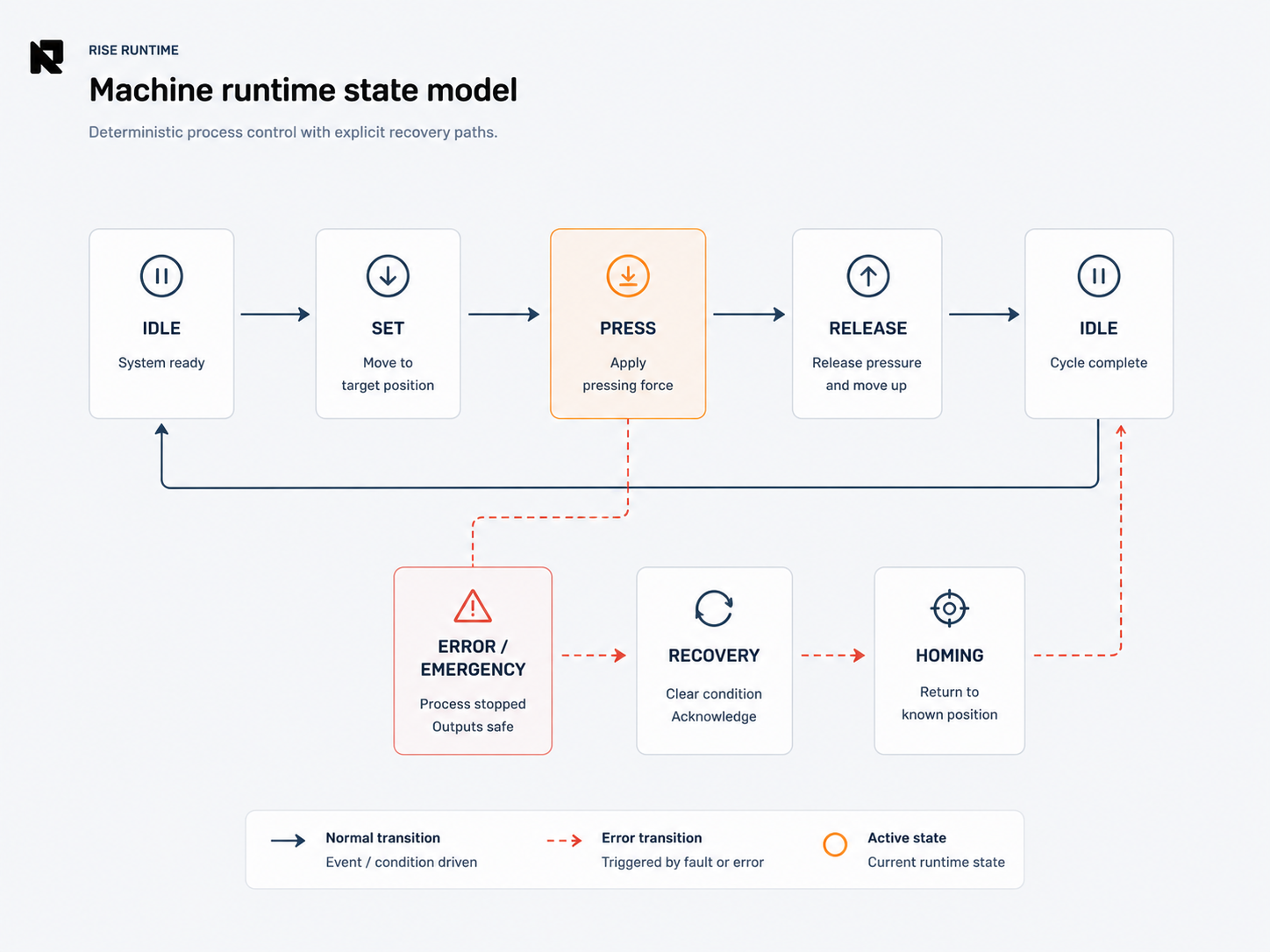
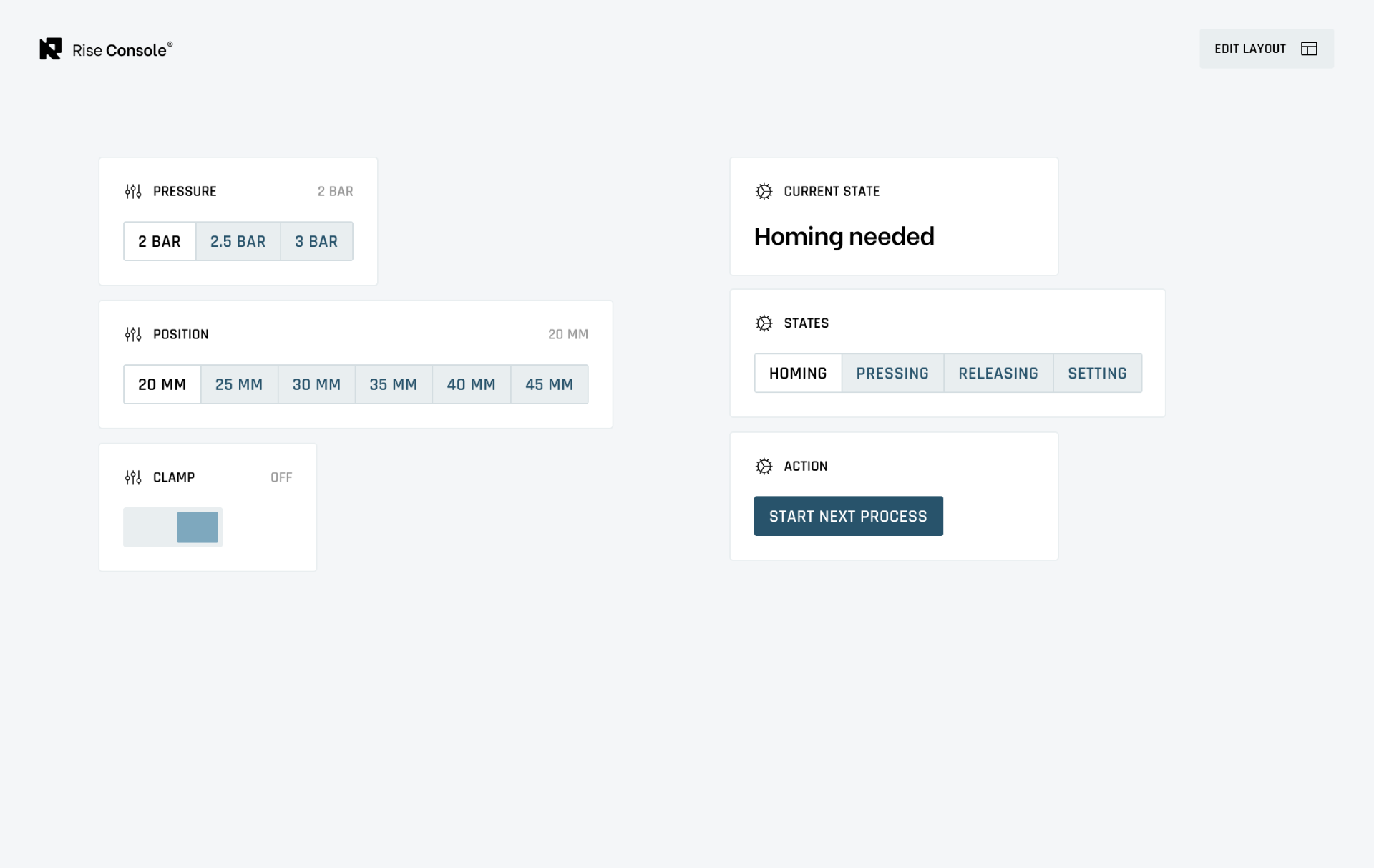
A press-control implementation connects motion sequences, workpiece information and operator actions. Device communication, drive integration and a configurable HMI support the application logic. The example shows how a specific machine process can be represented through explicit states and coordinated commands, with reusable components providing the communication and interface foundations for further development.

  • Machine states
  • Drive integration
  • Operator interface
Application logic and machine states

Implementation example

02

Site operations

A site-management implementation brings access events, gate information and operator views into a shared application. Device integrations feed an event history, while workstation views and local displays present information for different users. It provides a concrete basis for discussing site workflows, the information operators need and the integrations required for a particular deployment.

  • Access events
  • Event history
  • Local displays
Architecture illustration
01

Devices and access events

02

Application and event history

03

Operator views and local displays

Implementation example

03

Industrial I/O and HMI

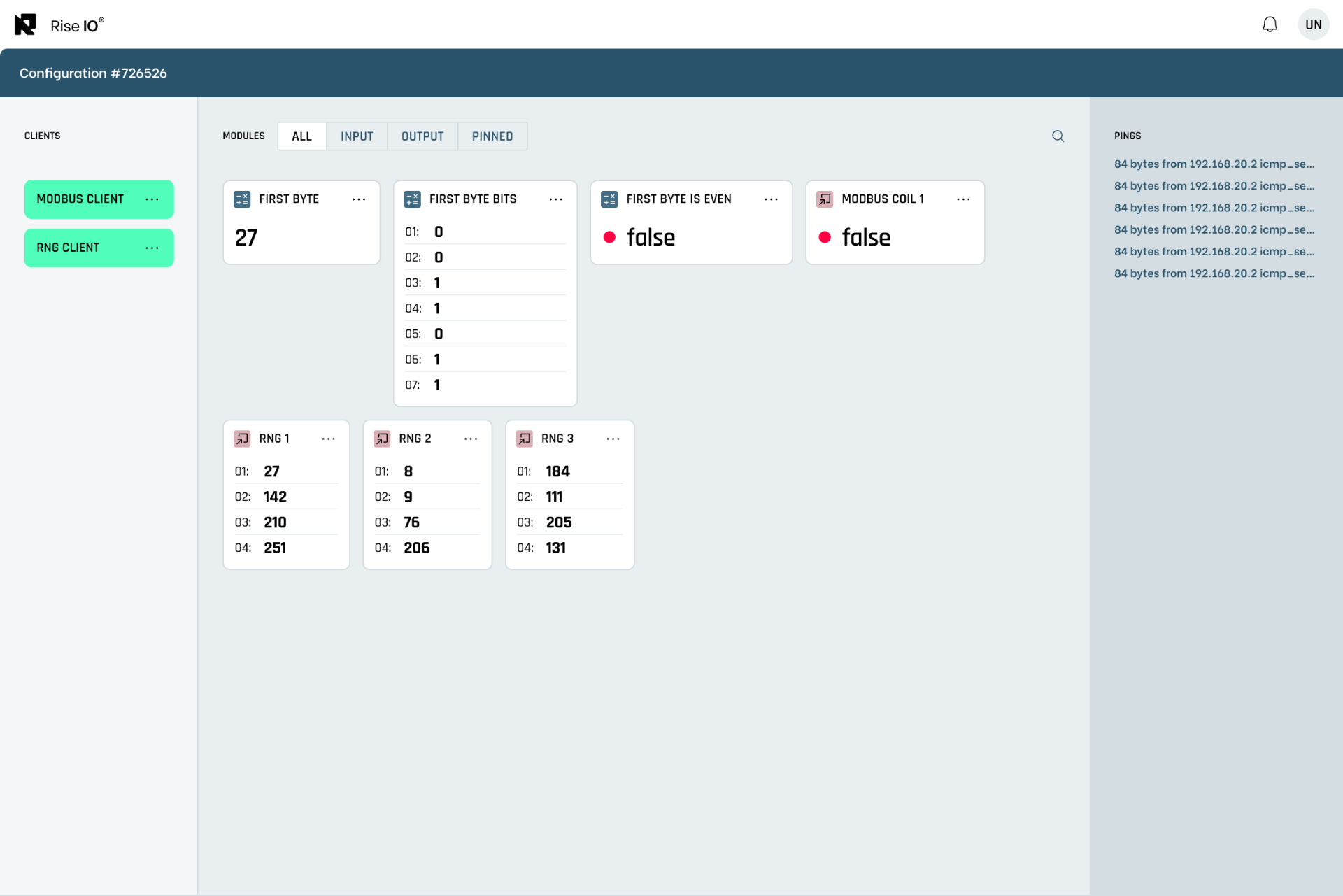
Reusable device and interface components connect industrial signals with application controls. The I/O layer maps Modbus TCP devices into named signals and actions; the HMI layer provides controls, status elements and logs. Together, they illustrate how communication details and operator presentation can be organised as separate, reusable parts of an individual machine application.

  • Modbus TCP
  • Named signals
  • Reusable controls
Industrial signals and device interfaces

Tell us what you are building.

Discuss a similar challenge